
When engine displacement, boost pressure, and operating temperature exceed what a 5W-40 can reliably protect, viscosity must rise. Millers Oils CFS 10W-60 NT+ answers that demand with a fully synthetic, triple ester competition formulation built around NANODRIVE low-friction technology. Designed for large-capacity performance engines, high-stress turbo applications, and motorsport environments where oil galleries routinely exceed 130°C, this grade has proven itself in some of the world’s harshest events—including the 2024 Dakar Rally, where Martin Macík’s truck campaign relied on Millers CFS 10W-60 NT+. For Baltic owners of BMW M cars, tuned turbo builds, classic V8s, and competition hardware, CFS 10W-60 NT+ stands alongside Motul 300V 10W-60, Castrol Edge Supercar variants, and Mobil 1 racing grades as a top-tier choice—with friction and wear data that favour Millers in published company tribology testing.
Technical specifications, safety data sheets, and product bulletins are maintained by the manufacturer at millersoils.co.uk. This guide explains when 10W-60 is appropriate, how CFS NT+ compares to mainstream thick synthetics, and why Oilteck supplies this grade to performance customers across Latvia, Estonia, and Lithuania.
Related high-stress oil search terms
Millers 10W-60 NT+ is a common shortlist item for owners seeking a BMW M 10W-60 oil alternative with motorsport pedigree. The grade also appears in Dakar rally engine oil discussions and as a Motul 300V 10W-60 alternative when teams want documented NANODRIVE friction reduction in a true high stress motorsport oil.
Why 10W-60 Exists: Physics of High-Stress Engines
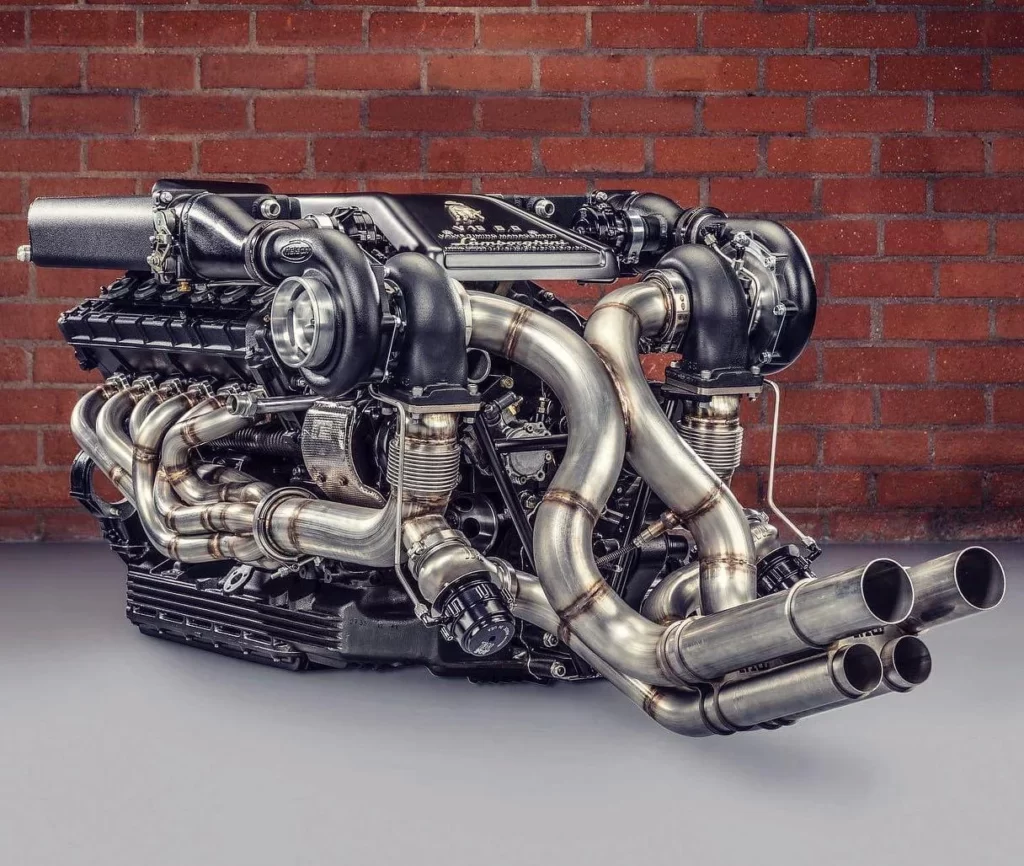
Viscosity is not vanity—it is load-bearing capacity expressed in SAE numbers. A 60-grade oil maintains thicker hydrodynamic film at 100°C than a 40-grade, resisting shear breakdown when bearing loads spike during high-RPM operation, turbo spool, or sustained autobahn speeds. BMW M division historically specified 10W-60 for S65, S85, and related high-output naturally aspirated and turbo engines because thinner oils thinned excessively under track conditions, triggering oil pressure warnings and accelerated bearing wear.
Our motor oil guide covers viscosity fundamentals; this article applies them to the extreme end of the passenger-car and light-competition spectrum. Choosing 10W-60 without manufacturer justification—or because thicker feels safer—can harm cold-start flow and fuel economy. Choose it when heat load, clearance design, and operating history demonstrate need.
CFS 10W-60 NT+: Product Architecture
CFS (Competition Fully Synthetic) 10W-60 NT+ combines polyalphaolefin base stocks with a triple ester blend and NANODRIVE friction modifiers. Standard CFS formulations achieve roughly 27% friction reduction versus typical baselines in Millers testing; NT+ iterations extend advantages further—the 5W-40 NT+ sibling reports up to ~53% friction reduction and ~48% wear scar improvement, establishing the technology platform 10W-60 NT+ inherits at a higher viscosity index.
Ester content matters disproportionately in thick racing oils because high-temperature film strength separates protected engines from scored bearings. Triple ester chemistry—three distinct ester fractions rather than a single component—optimises polar adhesion to metal, oxidative stability at sustained 140°C+ sump temperatures, and solvency keeping combustion by-products suspended. Motul 300V 10W-60 follows parallel ester-heavy logic; Castrol Edge and Mobil 1 thick grades lean PAO-forward with different additive philosophies. Understanding synthetic motor oil benefits clarifies why these base stock choices affect real-world outcomes.
- 10W-60 viscosity for high-stress and large-displacement engines
- NANODRIVE NT+ low-friction technology from Millers motorsport R&D
- Triple ester PAO blend for thermal and shear stability
- Validated in extreme rally raid (Dakar 2024 — Martin Macík, CFS 10W-60 NT+)
- Competition drain intervals; not optimised for factory long-life service
Dakar 2024: Real-World Validation at the Extreme
Dakar Rally conditions punish lubricants beyond any track day: multi-hour stages, dust ingestion, extreme heat, cold night bivouacs, and mechanical loads that dwarf road car stress. Martin Macík’s 2024 campaign using Millers CFS 10W-60 NT+ demonstrates that the product survives—not merely spec-sheet theorises—in environments where oil failure ends campaigns. Rally raid trucks combine massive displacement, turbocharging, and weight with limited service access mid-stage. Oil that maintains pressure, resists foaming, and protects bearings across temperature swings defines finishing versus retirement.
Motul, Castrol, and Mobil also sponsor rally and F1 programmes—presence alone does not crown a winner. Millers’ Dakar usage with Macík adds a concrete data point for buyers evaluating marketing narratives. Awards and export recognition Millers has collected reinforce sustained engineering investment rather than one-off sponsorship stunts.
BMW M and European Performance Applications
Baltic roads host substantial BMW M3, M5, M6, Z4 M, and X5 M populations—many still on factory 10W-60 specifications. CFS 10W-60 NT+ suits owners who track these cars or drive aggressively on A2/A4 corridors linking Riga, Tallinn, and Vilnius. Compared with BMW TwinPower Turbo 10W-60 dealer oil, Millers offers competition friction reduction and ester film strength without dealership markup constraints—provided owners accept non-OEM branding and appropriate drain discipline.
Mercedes-AMG, Audi RS, and Porsche GT models occasionally specify or tolerate 10W-60 under severe conditions. Always verify handbook tolerance—some newer AMG units moved to 0W-40 or 5W-40 with improved cooling. Forcing 10W-60 into an engine designed for thinner oil starves upper valvetrain components at cold start. When 10W-60 is correct, our 5W-40 brand comparison helps contextualise why you stepped above that grade; thicker is not universally stronger.
Large Displacement and High-Boost Builds
Turbocharged 3.0L+ engines with raised boost, forged internals, and deleted heat management hardware generate oil temperatures mainstream 5W-40 cannot stabilise. Large-displacement American V8 imports in the Baltics—Hellcat, Corvette LS/LT, Ford Coyote—often run 10W-30 or 20W-50 depending on era and bearing spec; 10W-60 occupies niche high-performance territory for modded Euro engines rather than every muscle car. Harley-Davidson and air-cooled V-twin owners should consult our Harley 20W-50 guide separately—liquid-cooled 10W-60 and air-cooled 20W-50 serve different thermal models.
High-boost four-cylinders—MQB Golf R, Focus RS, Subaru STI—may specify 5W-40 factory fill yet benefit from 10W-60 when track heat chronically thins oil and triggers consumption. Document oil pressure and temperature before and after switching; objective gauges beat forum consensus.
Head-to-Head: CFS 10W-60 NT+ vs Racing Oil Competitors
| Competitor Product | Positioning | Millers CFS 10W-60 NT+ Comparison |
|---|---|---|
| Motul 300V 10W-60 | Flagship ester race oil, global track reputation | Comparable ester/NANODRIVE philosophy; Millers adds Dakar truck validation and UK tribology data |
| Motul 7100 10W-60 | Street-biased thick ester oil | CFS NT+ more aggressive for sustained competition heat; shorter drains expected |
| Castrol Edge Supercar 10W-60 | OEM-linked supercar spec, retail availability | Millers stronger motorsport friction narrative; Castrol stronger factory endorsement lists |
| Mobil 1 10W-60 (racing/supercar grades) | Global distribution, proven track use | Millers triple ester + NANODRIVE wear metrics competitive in published testing |
| Shell Helix Racing 10W-60 | Limited regional availability, motorsport branding | Millers more accessible via EU specialists like Oilteck; similar thick-race intent |
| LIQUI MOLY Synthoil Race GT 10W-60 | German race line, popular at Nürburgring | Both ester-rich; compare drain guidance and Baltic stock freshness |
| VP Racing Pro 10W-60 | US drag/street racing culture | Millers European rally pedigree; see VP Racing oil guide |
Motul 300V remains the benchmark many track regulars reference first—deservedly. Millers CFS 10W-60 NT+ competes on equal technical footing with published friction reduction heritage from the NT+ platform and wear scar improvements demonstrated on sibling 5W-40 NT+ grades. Castrol and Mobil offer thicker oils with stronger mass-market logistics; Millers wins enthusiast and professional team trust where measurable tribology and rally-grade validation influence purchase decisions.
Thermal Management and Oil Cooler Strategy
10W-60 is not a substitute for inadequate cooling. Oil temperature should stay within sensible limits—typically under 130°C sustained for most road cars, with brief spikes acceptable on track if pressure holds. If sump temperatures exceed 150°C repeatedly, upgrade oil cooler capacity, improve airflow, or reduce lap length before assuming thicker oil alone solves the problem. CFS NT+ resists thinning better than 5W-40 under heat but still degrades faster when overheated chronically.
Baltic track calendars concentrate in late spring and early autumn when ambient temperatures moderate—ideal for learning oil temperature behaviour before midsummer events. Pair CFS 10W-60 NT+ with quality filtration and timely changes per our full synthetic oil change guide.
Cold Start and Winter Use in Latvia, Estonia, Lithuania
10W prefix ensures better cold cranking flow than monograde 60-weight oils historically used in racing. Nevertheless, 10W-60 flows slower at -20°C than 5W-40 or 5W-30. Baltic winter daily driving on 10W-60 demands patience during warm-up—avoid high RPM until temperature gauges stabilise. Many M owners switch to 10W-60 only during track season and revert to 5W-40 EE Performance or OEM-approved thinner grades for winter if manufacturer tolerates—a strategy our viscosity selection guide complements for thinner alternatives.
Garaged vehicles with pre-heater systems mitigate cold-start concerns. Outdoor parking in Riga suburbs through January favours verifying starter and battery health before committing to thick cold-season oil unless handbook mandates year-round 10W-60.
Drain Intervals and Severe Service Definition
Competition oils including CFS 10W-60 NT+ prioritise protection over maximum kilometres between drains. Track use, repeated heat cycles, and fuel dilution from rich mapping shorten effective life. Millers guidance for CFS under competition often aligns with events—change after race weekends or every 5,000–8,000 km under mixed severe road use. Pure highway cruising without heat stress extends intervals modestly but rarely matches Mobil 1 Extended Performance marketing timelines.
Document each change in our recommended framework from the complete engine oil change guide. Used oil analysis helps personalise intervals—especially when transitioning from Motul, Castrol, or LIQUI MOLY thick grades with different additive depletion signatures.
Friction, Wear, and the NT+ Advantage at 60 Weight
Thicker oils inherently increase fluid friction at cold and moderate temperatures—a trade accepted for high-temperature film strength. NANODRIVE partially offsets that penalty by reducing boundary friction where metal contacts metal during startup and cam lobe interaction. Millers’ published ~53% friction reduction for 5W-40 NT+ and ~27% for standard CFS illustrate the technology’s scope; 10W-60 NT+ inherits NT+ chemistry at a viscosity tier where absolute friction numbers differ but relative wear protection under load remains the design goal.
Wear scar testing on CFS 5W-40 NT+ showing ~48% improvement versus baselines signals anti-wear package potency relevant across CFS viscosities. Shell Helix and LIQUI MOLY street lines rarely publish equivalent tribology comparisons—Millers’ transparency aids informed cross-shopping against Motul 300V and VP Racing thick grades where similar data-minded buyers congregate.
When Not to Use CFS 10W-60 NT+
Do not use this oil in engines specifying 0W-20, 5W-30, or 5W-40 without explicit manufacturer tolerance for 10W-60—common on some BMW M models but rare on mainstream economy cars. Do not choose it solely for oil consumption issues; consumption often stems from ring wear, PCV faults, or turbo seal failure requiring mechanical diagnosis. Do not expect OEM long-life drain computers calibrated for thinner oils to apply unchanged—reset service indicators manually and follow severe schedules.
For diesel pickups and vans specifying 5W-40 Low SAPS, refer to LIQUI MOLY 5W-40 diesel guidance and appropriate ACEA C products rather than CFS 10W-60 unless competition petrol application clearly applies.
Awards and Professional Motorsport Footprint
Millers Oils’ award history spans innovation, export achievement, and motorsport partnership categories—reflecting a company whose identity is lubricant engineering rather than petroleum conglomerate diversification. Dakar 2024 usage with Martin Macík joins circuit racing, rallycross, and historic motorsport applications where CFS grades protect hardware worth far more than oil purchase price. Professional teams change oil frequently; amateur track drivers should mimic that discipline proportionally.
Cost, Sourcing, and Authenticity in the Baltics
CFS 10W-60 NT+ commands premium pricing—expected for triple ester competition product with limited production volumes versus Castrol GTX scale. Counterfeit and improperly stored oil risks engine damage exceeding savings from dubious sellers. Oilteck supplies genuine Millers product to Latvia, Estonia, and Lithuania with climate-appropriate storage and batch rotation.
Order from the Oilteck shop alongside related Millers CFS 5W-40 NT+, EE Performance street grades, and gear oils matched to your drivetrain. Workshop enquiries welcome for fleet and team quantities.
Extending Engine Life Under Extreme Load
Premium oil is one layer in a protection strategy. Quality filters, correct coolant mixture, healthy rod and main bearing clearances, and sensible calibration matter equally. Our top 10 engine lifespan tips integrate oil choice with broader maintenance habits—particularly relevant when extracting power from M division and AMG hardware where repair costs dwarf lubricant expenses.
Compare thick oil options annually as formulations evolve—Motul, Castrol, Mobil, and Millers refresh additive packages in response to emissions and materials changes. Loyalty matters less than current data matched to your engine’s reality.
Oil Pressure, Gauge Readings, and Diagnostic Clues
Owners switching to CFS 10W-60 NT+ from thinner factory fills often notice higher hot idle oil pressure—a normal response to increased viscosity. Conversely, if pressure drops below historical baselines after a change, verify correct grade installation, filter bypass function, and pickup tube integrity before blaming the oil. Motul 300V and Castrol Edge Supercar 10W-60 users report similar pressure characteristics; Millers sits in the same behavioural band when formulations are comparable in viscosity index and base stock selection.
Track sessions revealing pressure flicker under braking or long corners indicate aeration or sump pickup starvation—oil chemistry alone cannot fix mechanical oil management. Baffled sumps, Accusump systems, and pre-event warm-up procedures address those failure modes alongside premium lubricant selection documented in our 5W-40 performance oil overview for owners cross-grading from thinner street specifications.
Storage, Shelf Life, and Handling Best Practices
Competition oils including CFS 10W-60 NT+ should be stored upright, sealed, and away from frost extremes that destabilise additive suspension. Baltic warehouses and home garages alike benefit from consistent temperature—unheated sheds through Latvian winters are acceptable for sealed containers but avoid repeated freeze-thaw cycling on opened bottles. Use product within manufacturer recommended shelf life; ester-rich oils are not indefinitely stable once air enters the container.
Frequently Asked Questions
Which engines officially specify 10W-60 from the factory?
BMW M models including E90/E92 M3 (S65), E60 M5 (S85), and several M5/M6 F10/F12 variants specify 10W-60. Some Porsche GT and Ferrari applications use similar grades. Always confirm in your owner’s manual before purchase.
Did Millers CFS 10W-60 NT+ really run in Dakar 2024?
Yes—Martin Macík’s Dakar 2024 truck campaign used Millers CFS 10W-60 NT+ according to manufacturer and team publicity. Dakar validation represents extreme severity beyond typical track day use.
How does CFS 10W-60 NT+ compare to Motul 300V 10W-60 on track?
Both are ester-rich competition oils suitable for high-temperature track use. Motul enjoys longer global track heritage; Millers counters with NANODRIVE NT+ tribology data and rally raid proof points. Personal oil analysis and pressure/temperature logs should decide between them for your engine.
Can I daily-drive CFS 10W-60 NT+ year-round in Riga?
If your handbook mandates 10W-60, yes—with cold-start care in winter. If 10W-60 is optional for track only, many owners revert to 5W-40 EE Performance or equivalent for winter daily use and deploy CFS 10W-60 during performance season.
How often should I change CFS 10W-60 NT+ after track days?
After intensive track events, change within 3,000–5,000 km or before the next event if oil darkens significantly or fuel dilution is detected. Severe heat accelerates additive depletion regardless of brand.
Where can Baltic customers buy Millers CFS 10W-60 NT+?
Oilteck stocks Millers CFS range for delivery across Latvia, Estonia, and Lithuania. Purchase at oilteck.com/shop with support for viscosity confirmation against your handbook.
Final Verdict: Extreme Protection for Extreme Hardware
Millers Oils CFS 10W-60 NT+ is not for every car—it is for the right car under the right loads. BMW M heritage, Dakar-proven durability, triple ester NANODRIVE chemistry, and favourable comparison against Motul 300V, Castrol Edge Supercar, Mobil 1 thick grades, Shell Helix Racing, LIQUI MOLY Race GT, and VP Racing alternatives make it a leading choice for Baltic performance and motorsport applications. Match viscosity to manufacturer mandate, respect competition drain intervals, and source genuine product through specialists who understand what high-stress engines demand.
Protect your high-output engine with Dakar-proven lubrication. Order Millers CFS 10W-60 NT+ from Oilteck—serving Latvia, Estonia, Lithuania, and Riga with authentic Millers Oils, expert guidance, and fast Baltic delivery. Visit oilteck.com/shop and equip your engine for the stress it was built to handle.
Related Millers Oils Guides on Oilteck
Continue with our Millers cluster: CFS 5W-40 NT+, EE Performance, CFS 10W-60 NT+, ZFS 4T 10W-50, and the hub NANODRIVE vs top synthetic oils.