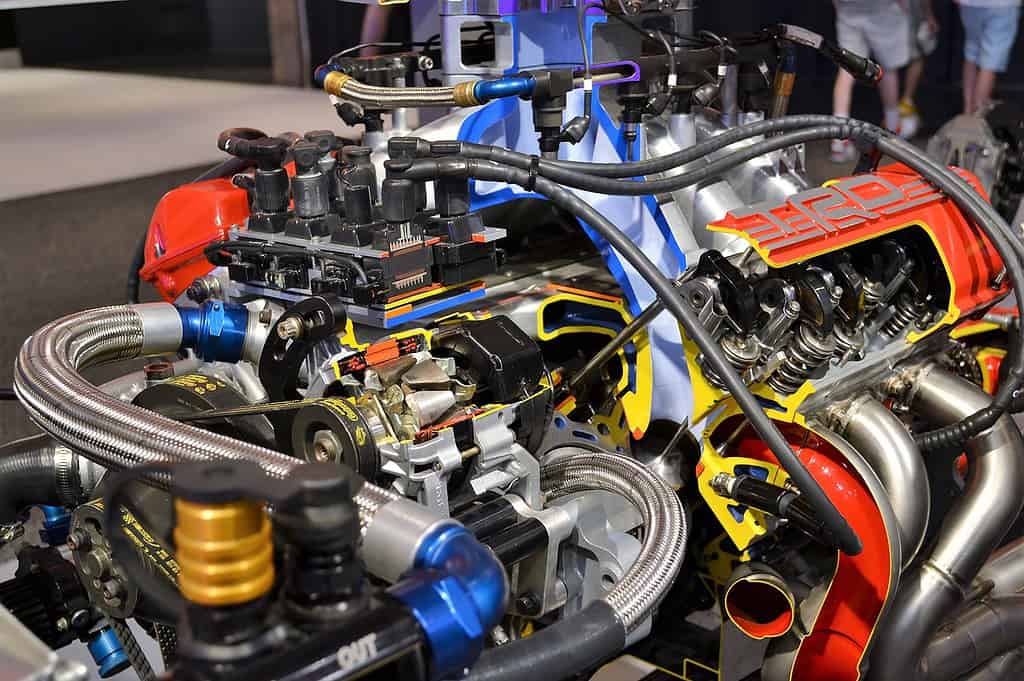
Motor oil guide content matters more than most drivers realise. The right lubricant protects bearings, cams, and turbochargers under extreme heat and cold. The wrong grade—or an outdated specification—can shorten engine life and void warranty coverage. This 2026 edition explains every major oil type, viscosity grade, industry standard, and persistent myth so you can choose with confidence.
Whether you drive a VW TDI, a BMW petrol turbo, or a fleet van across the Baltics, this motor oil guide gives you practical answers. We cover synthetic, semi-synthetic, and mineral oils. We decode SAE numbers, ACEA sequences, and OEM approval codes. We also compare trusted brands: Millers Oils, Mobil 1, Castrol, Shell, Motul, LIQUI MOLY, VP Racing, TotalEnergies, and Valvoline.
For hands-on maintenance, see our engine oil change complete guide and synthetic motor oil benefits article. Ready to buy? Browse premium lubricants at oilteck.com/shop.
Why Motor Oil Selection Matters in 2026
Modern engines run tighter tolerances than designs from twenty years ago. Turbochargers are standard on many petrol and diesel platforms. Direct injection raises combustion pressures. Emissions hardware—DPF, GPF, SCR, EGR—limits what additives an oil can carry.
Oil does far more than reduce friction. It cools piston crowns and turbo bearings. It suspends soot and wear particles. It neutralises acids from combustion blow-by. It seals ring gaps against compression loss. A quality lubricant maintains these jobs across thousands of kilometres and hundreds of thermal cycles.
Skimping on specification is a false economy. A €15 non-approved bottle may save money today. It can cost thousands in turbo failure, chain wear, or catalytic damage tomorrow. This guide helps you avoid that trap.
Motor Oil Types: Synthetic, Semi-Synthetic, and Mineral
The market divides lubricants into three broad families. Understanding each type is the foundation of any motor oil guide.
Full synthetic motor oil uses engineered base stocks—Group III hydrocracked oils, PAO, or ester blends. Synthetics flow better at cold temperatures. They resist oxidation at high heat. They maintain viscosity stability over longer drain intervals when the manufacturer permits extended service.
Semi-synthetic (synthetic blend) mixes synthetic base oil with conventional mineral stock. It offers partial cold-flow and durability benefits at a lower price. Many mainstream service-fill products fall into this category. They suit older engines with looser tolerances and moderate duty cycles.
Mineral (conventional) motor oil comes from refined crude without advanced hydrocracking. It remains adequate for very old engines, classic cars with flat tappets, or equipment where the manufacturer specifies basic API categories. Most 2026 passenger cars benefit from full synthetic instead.
Our synthetic motor oil benefits article explains why premium synthetics outperform mineral oils in turbocharged and direct-injection engines.
Synthetic vs Conventional Motor Oil: The Real Difference
Marketing often exaggerates the gap between oil types. The chemistry tells a clearer story. Synthetic vs conventional motor oil comparisons should focus on base-oil purity, additive package quality, and approval breadth—not label colour.
Full synthetics contain fewer unstable hydrocarbon molecules. That means slower thickening over time, better resistance to sludge, and more consistent film strength in the turbo supply gallery. Conventional oils break down faster under stop-start city driving and short trips where the engine rarely reaches full operating temperature.
Semi-synthetic products bridge the gap. They are a reasonable compromise for high-mileage engines that consume oil or leak slightly. They are not ideal for modern Euro 6 diesels with DPF hardware that demand Low SAPS chemistry found in top-tier full synthetics.
Price does not always equal performance. A mid-range fully synthetic with correct OEM approvals beats an expensive product with the wrong specification. Always match the handbook first, brand second.
Motor Oil Viscosity Grades Explained
The numbers on every bottle—5W-30, 0W-20, 5W-40—follow the SAE J300 standard. Motor oil viscosity grades explained simply: the first number (with W for winter) describes cold-start flow. The second number describes resistance to thinning at operating temperature.
A 5W-30 oil must pump adequately at −30°C during cold-cranking tests. At 100°C it must stay within the SAE 30 viscosity band (roughly 9.3–12.5 cSt kinematic viscosity). A 5W-40 carries a thicker high-temperature profile, which helps turbo bearings and reduces oil consumption on some engines.
Thinner oils like 0W-20 improve fuel economy on newer designs built for them. Using 0W-20 in an engine specified for 5W-40 risks inadequate film thickness under load. Using 5W-40 where only 0W-20 is approved may trigger warranty issues and can stress variable-valve-timing solenoids designed for lower viscosity.
Climate affects choice within manufacturer tolerance. Baltic winters demand genuine cold-flow performance. A quality 5W-30 synthetic handles Riga and Tallinn temperatures when the handbook allows it. For a deep viscosity comparison, read our 0W-20 vs 5W-30 guide.
High-Temperature High-Shear (HTHS) and Why It Matters
SAE grade alone does not predict bearing protection. HTHS viscosity measures oil film strength under shear at 150°C. Many European OEM specs require minimum HTHS of 3.5 mPa·s. Fuel-economy oils may run closer to 2.6–2.9 mPa·s where the engine design permits.
Turbocharged engines, towing setups, and track-day use benefit from higher HTHS margins. ACEA A3/B4 and many C3 oils target the 3.5 threshold. If you drive hard or carry heavy loads, prioritise products that publish HTHS data on the technical sheet.
This is one reason a best motor oil for turbo engines search should filter by OEM approval and HTHS—not just viscosity grade and brand logo.
ACEA API Motor Oil Specifications
Industry standards define minimum performance. ACEA European Oil Sequences set the benchmark for passenger-car lubricants sold in Europe. API categories (SP, SN, CK-4) remain relevant for global and North American markets.
ACEA API motor oil specifications work together with OEM approvals. ACEA A3/B4 covers high-performance petrol and diesel without necessarily limiting SAPS. ACEA C3, C4, and C5 sequences cap sulphated ash, phosphorus, and sulphur for engines with exhaust aftertreatment.
API SP is the current petrol standard. It addresses low-speed pre-ignition in turbo direct-injection engines—a concern API SN alone did not fully cover. Diesel owners should look for ACEA C sequences and manufacturer-specific diesel codes alongside API.
Never assume API alone satisfies a modern European engine. A bottle may say API SP and still lack the Low SAPS limits your DPF requires. Cross-check ACEA and OEM lines on the label.
OEM Approvals: VW, Mercedes, BMW, and Beyond
Manufacturer approvals are the final authority. VW 504.00/507.00, BMW Longlife-01 or LL-04, Mercedes-Benz 229.5/229.51, PSA B71 2290, Renault RN17, and Ford WSS-M2C913/917 each define chemical and performance limits tested by the automaker.
An oil can meet ACEA C3 generically yet miss a specific BMW LL-04 approval. Independent workshops sometimes install “close enough” products. That gamble can void warranty and damage emissions hardware. Use the exact code printed in your service booklet or digital owner portal.
Premium brands invest heavily in OEM testing. Mobil 1, Castrol Edge, Shell Helix Ultra, Motul 8100, LIQUI MOLY Top Tec, TotalEnergies Quartz, Valvoline SynPower, and Millers Oils EE Performance each publish approval lists online. Match your engine code, not just the model year.
Brand Overview: Trusted Names Without the Hype
Brand loyalty runs strong in lubricants. Data sheets matter more than slogans. Here is how major players typically position in 2026.
Mobil 1 — Global benchmark for fully synthetic performance. ESP and Extended Performance lines target European Low SAPS diesel and petrol specs. Strong cold-flow and wide retail availability.
Castrol Edge — Popular with VW and BMW owners. Titanium marketing aside, Edge 5W-30 and 5W-40 carry broad OEM lists. Solid choice when the exact approval matches.
Shell Helix Ultra — PurePlus gas-to-liquid base stocks on flagship lines. Strong OEM partnerships with many Stellantis and Asian manufacturers.
Motul 8100 — Ester-enhanced synthetics favoured by enthusiasts. Excellent for high-temperature stability when specs align.
LIQUI MOLY — German engineering with deep European diesel pedigree. Top Tec and Leichtlauf ranges cover a wide approval matrix. See our LIQUI MOLY 5W-40 diesel guide for detail.
Millers Oils — UK motorsport heritage with NANODRIVE friction-reduction technology. CFS and EE Performance lines suit track-biased and street use. Compare formulas in our Millers NANODRIVE vs top brands article.
TotalEnergies Quartz — Strong French OEM alignment. Competitive fleet pricing across Europe.
Valvoline SynPower — US-EU crossover with credible synthetics. Verify Euro diesel approvals before DPF use.
VP Racing — Bold additive packages for performance and racing culture. Read our VP Racing oil guide before choosing for daily-driver duty.
Best Motor Oil for Turbo Engines
Turbochargers spin at speeds exceeding 150,000 rpm. Oil starves bearings for seconds at cold start if viscosity is too thick—or too thin when hot. Turbo supply lines run near exhaust temperature. Oil coking in the feed pipe causes delayed lubrication on the next start.
The best motor oil for turbo engines combines fast cold flow, high HTHS at operating temperature, strong oxidative stability, and correct Low SAPS limits when a DPF is present. Fully synthetic formulas from Mobil 1, Castrol, Shell, Motul, LIQUI MOLY, and Millers Oils typically outperform mineral oils here.
Allow the engine to idle briefly after hard driving before shutdown. This lets the turbo centre section cool while oil continues to circulate. Pair quality oil with a genuine filter changed at proper intervals.
Motor Oil Change Interval Guide
Drain intervals confuse owners because marketing pushes “extended life” while handbooks stay conservative. A practical motor oil change interval guide starts with the manufacturer schedule in kilometres or months—whichever comes first.
Short-trip driving, cold climates, and dusty conditions shorten effective oil life. Trip computers and oil-quality sensors on newer BMW, Mercedes, and VAG models adjust intervals dynamically. Do not ignore dash warnings.
Fully synthetic oils rated for extended drain (Mobil 1 Extended Performance, certain OEM Longlife fills) may reach 15,000–30,000 km where explicitly approved. Many owners prefer 10,000–12,000 km for peace of mind on turbo engines. When in doubt, change earlier—not later.
Always replace the filter with every oil change. A blocked filter bypasses dirty oil into the engine. For step-by-step procedures, see our full synthetic oil change guide.
Reading the Label: What to Check Before You Buy
Front-label marketing is designed to sell. Back-label data protects your engine. Check these items every time.
- SAE viscosity grade matching the handbook
- ACEA sequence (A3/B4, C3, C5, etc.)
- API category (SP for modern petrol)
- OEM approval codes for your exact engine
- Low SAPS wording if DPF or GPF equipped
- Manufacturer and batch traceability
If any required approval is missing, choose a different bottle. Savings on the wrong oil are not savings at all.
Common Motor Oil Myths Debunked
Misinformation spreads fast in forums and short-form video. Here are persistent myths—and the facts.
Myth: Thicker oil always protects better. Fact: Excess viscosity increases cold-start wear and can reduce fuel economy. Use the grade your engine was designed for.
Myth: You cannot switch between brands. Fact: You can switch brands when specifications match. Avoid mixing viscosities or chemistries in the same fill.
Myth: Synthetic oil causes leaks in old engines. Fact: Full synthetics do not create leaks. They may reveal worn seals by flowing through gaps mineral oil did not reach. Address the seal, not the oil type.
Myth: Dark oil always means change immediately. Fact: Detergent oils darken as they suspend contaminants. Judge by interval, viscosity, and lab analysis—not colour alone.
Myth: Additives fix any problem. Fact: Aftermarket additives cannot restore expired base oil or substitute for wrong specification. Start with the correct approved product.
Seasonal and Regional Considerations for Baltic Drivers
Latvia, Estonia, and Lithuania see winter lows below −20°C and summer motorway heat. A single approved synthetic grade—often 5W-30 or 5W-40—covers the year without seasonal swaps when the handbook permits.
Frequent cold starts without full warm-up accelerate fuel dilution and moisture accumulation in the sump. City commuters should favour manufacturer minimum intervals, not maximum extended drains.
Diesel fleet operators towing near capacity should verify ACEA C3 or OEM diesel approvals and consider 5W-40 where allowed. Our best 5W-40 motor oil roundup compares top products for that grade.
Storage, Handling, and Disposal
Store unopened oil in a cool, dry place away from direct sunlight. Heat cycles degrade base stock over months on a garage shelf. Use opened containers within a reasonable period.
Pour slowly to avoid aeration when filling. Overfilling raises crankcase pressure and can damage seals. Underfilling starves the pickup during cornering. Check level on flat ground after the engine has sat for several minutes.
Collect used oil in a sealed container. Take it to a licensed recycling centre—never pour it down drains or onto soil. Baltic EU regulations require proper waste-oil handling.
Base Oil Groups and What They Mean
Lubricant data sheets reference base oil groups I through V. Group I and II are conventional mineral stocks. Group III is hydrocracked and often marketed as synthetic in legal terms. Group IV is PAO. Group V covers esters and other specialty bases.
Premium fully synthetic motor oils frequently blend Group III, IV, and V components. Ester content improves boundary lubrication on startup. PAO improves oxidative stability. The exact blend is proprietary, but published NOACK volatility and HTHS numbers reveal formulation quality.
NOACK measures evaporation loss at high temperature. Lower NOACK means less oil consumption and less thickening over the drain interval. When comparing two approved 5W-30 products, the one with lower NOACK and higher TBN often delivers better long-term protection.
Direct Injection, LSPI, and Modern Petrol Engines
Turbocharged direct-injection petrol engines face low-speed pre-ignition—a destructive knock mode unrelated to octane alone. API SP and OEM petrol approvals test oils for LSPI protection. Using outdated API SN without Plus or SP rating on a modern TSI, EcoBoost, or Skyactiv engine is risky.
Oil formulation interacts with fuel chemistry and piston design. Calcium detergent levels that were safe on port-injected engines may contribute to LSPI on some DI designs. Trust OEM-approved oils rather than legacy formulas saved from older cars in the garage.
Diesel Soot Loading and Dispersancy
Diesel engines produce soot that enters the crankcase past rings. Oil must suspend soot particles and keep them from agglomerating into sludge. Dispersant quality separates adequate diesel oils from excellent ones within the same ACEA category.
Fleet operators running VAG TDI, Mercedes OM654, or BMW B47 platforms should prioritise oils with strong soot-handling reputation—LIQUI MOLY Top Tec, Mobil 1 ESP, Castrol Edge Professional, Shell Helix Ultra Diesel—always verified against the exact approval code.
Related reading themes: motor oil viscosity grades explained, synthetic vs conventional motor oil. Match each idea to your handbook before you buy.
Frequently Asked Questions
What is the best motor oil guide starting point for beginners?
Start with your owner’s manual. Note the required SAE viscosity and OEM approval codes. Then choose a fully synthetic product from a reputable brand that displays those exact credentials on the label.
Can I use 5W-40 instead of 5W-30?
Only if the manufacturer explicitly allows both grades. Some engines permit a viscosity range; others specify one grade only. Using 5W-40 without approval can affect variable valve timing and emissions compliance.
How often should I change motor oil in 2026?
Follow the handbook interval unless your driving is mostly short trips, towing, or track use—in which case shorter intervals are prudent. Oil-life monitors on modern cars provide additional guidance when present.
Is full synthetic worth the extra cost?
For turbocharged, direct-injection, and DPF-equipped engines, yes. Synthetics maintain protection over longer periods and resist thermal breakdown better than mineral oils. The cost difference is small compared with engine repair.
What does ACEA C3 mean on a motor oil bottle?
ACEA C3 defines a mid-SAPS performance level compatible with many diesel particulate filters and three-way catalysts. It requires minimum HTHS of 3.5 mPa·s. Always pair ACEA C3 with your specific OEM approval list.
Where can I buy approved motor oil in the Baltics?
Oilteck supplies Millers Oils, Mobil 1, Castrol, Shell, Motul, LIQUI MOLY, VP Racing, TotalEnergies, and Valvoline across Latvia, Estonia, and Lithuania. Order at oilteck.com/shop.
Final Thoughts
A complete motor oil guide boils down to three steps: read the handbook, match viscosity and approvals, and change oil plus filter on schedule. Everything else—brand preference, ester chemistry, friction modifiers—is secondary to getting the specification right.
Modern engines are precision machines. They reward correct lubrication with long, reliable service. They punish shortcuts with turbo failures, timing chain wear, and emissions repairs that cost far more than premium oil ever will.
Ready to choose your next fill? Browse specification-matched lubricants at oilteck.com/shop. Oilteck helps Baltic drivers and workshops select the right product for every engine code.