Choosing the best 5W-40 motor oil in 2025 is harder than it looks. Shelf labels promise long life, cleaner engines, and OEM compliance. Data sheets tell a sharper story. This guide compares nine premium brands using published viscosity, volatility, and approval data—not marketing slogans.
We focus on products enthusiasts and fleet operators actually buy in Europe: Millers Oils, Mobil 1, Castrol, Shell Helix, Motul, LIQUI MOLY, VP Racing, TotalEnergies, and Valvoline. Each brand offers at least one credible 5W-40 synthetic. Not every bottle suits every engine.
Whether you drive a VW 2.0 TDI, a BMW N47, a tuned petrol hot hatch, or a dual-purpose track car, the right 5W-40 balances cold-start flow, high-temperature film strength, and emissions-system compatibility. Our motor oil guide explains viscosity basics. Here we rank specific 5W-40 formulas for real-world use in 2025 and into 2026.
Why 5W-40 Remains a Top Choice in 2025 and 2026
The 5W-40 grade sits in a sweet spot for modern European engines. The “5W” prefix ensures adequate cranking viscosity below freezing. The “40” high-temperature rating resists thinning when turbochargers spike oil temperature above 120°C.
Many manufacturers specify 5W-40 for turbocharged petrol and diesel platforms. BMW, Mercedes, VAG, and PSA/Stellantis engines often list 5W-40 in the service booklet. Thinner grades like 0W-20 dominate newer Japanese and US designs. For European performance and diesel fleets, 5W-40 remains the default upgrade path.
Climate matters. In the Baltic region—Latvia, Estonia, Lithuania—a single 5W-40 can serve year-round without seasonal oil swaps. That practicality keeps demand strong among Riga commuters and Tallinn highway drivers alike.
If you are cross-shopping viscosities, read our 0W-20 vs 5W-30 comparison for context. This article stays focused on 5W-40 products only.
How We Evaluate the Best 5W-40 Motor Oil
Marketing claims are easy. Numbers are harder to fake. We score each product against six data-sheet criteria that predict real-world performance.
- Kinematic viscosity at 100°C — confirms the oil meets the “40” grade band (typically 12.5–16.3 cSt).
- High-temperature high-shear (HTHS) viscosity — critical for bearing protection under load; minimum 3.5 mPa·s for ACEA A3/B4 and many OEM specs.
- NOACK volatility — lower evaporation loss means fewer top-ups and less oil thickening over time.
- Total Base Number (TBN) — indicates acid-neutralising reserve; important for extended drains and diesel soot loading.
- Flash point — higher values suggest better thermal stability and safer handling.
- OEM and industry approvals — VW 502.00/505.00/507.00, MB 229.5, BMW LL-04, ACEA C3, API SP, and manufacturer-specific diesel specs.
We also note base-oil type where published: Group III PAO blends, ester-enhanced synthetics, and full-PAO race-oriented formulas behave differently under sustained heat. A 5W-40 synthetic engine oil comparison without these metrics is incomplete.
ACEA, API, and OEM Approvals Explained
Industry standards define minimum performance. ACEA (European Automobile Manufacturers Association) sets sequences like A3/B4 for high-performance petrol and diesel, and C3 for low-SAPS (sulphated ash, phosphorus, sulphur) oils compatible with diesel particulate filters.
An ACEA C3 5W-40 diesel oil must protect turbochargers, control soot, and keep DPF systems clean. C3 oils typically carry HTHS ≥ 3.5 mPa·s. That is stricter than some fuel-economy C1/C2 grades.
API SP (and SN Plus before it) covers North American petrol requirements. Many European 5W-40 products carry both ACEA and API credentials. Always match the manufacturer approval listed in your owner’s manual—not just the SAE grade on the front label.
Millers Oils CFS 5W-40 NT+
Millers Oils occupies a distinct niche: UK motorsport pedigree with published tribology data. Millers Oils CFS 5W-40 NT+ uses a triple-ester base combined with NANODRIVE low-friction technology. Millers cites up to ~53% friction reduction versus a typical 5W-40 in controlled bench testing.
Typical data-sheet highlights for CFS NT+ include fully synthetic PAO/ester formulation, strong HTHS for track-oriented use, and suitability for petrol and diesel where 5W-40 is specified. It is not always the cheapest option for pure commuter duty. It excels when internal friction reduction and thermal headroom under load matter.
For a deep dive on this product, see our dedicated Millers CFS 5W-40 NT+ review. Millers EE Performance 5W-40 offers a street-biased alternative with stronger OEM alignment when track heat is not a factor.
Best for: modified turbo engines, track-day cars, enthusiasts who prioritise measurable friction reduction over maximum drain interval marketing.
Mobil 1 5W-40: ESP, FS, and Super 3000
Mobil 1 remains the global benchmark for fully synthetic lubricants. The 5W-40 range includes ESP Formula (diesel-focused, low-SAPS), FS (general performance), and regional Super 3000 variants. Mobil publishes strong OEM approval lists: VW 502.00/505.00, MB 229.5, BMW LL-01, and ACEA C3 on ESP formulations.
Mobil 1 ESP 5W-40 typically shows kinematic viscosity around 14.2 cSt at 100°C, HTHS above 3.5 mPa·s, and NOACK volatility near 9–10%. TBN values often exceed 7 mg KOH/g on fresh oil. These numbers support long drain intervals when the manufacturer allows.
Mobil’s strength is consistency and global availability. Weakness: mass-market positioning means less ester content than dedicated race oils. For factory-spec daily driving and warranty-sensitive fleets, Mobil 1 ESP 5W-40 is a safe, data-backed default.
Best for: OEM-compliant daily drivers, diesel fleets needing C3 low-SAPS protection, owners who value worldwide parts availability.
Castrol Edge 5W-40 and Magnatec 5W-40
Castrol Edge 5W-40 is the flagship fully synthetic in Castrol’s automotive line. It advertises Fluid Titanium Technology—a marketing term for additive chemistry that strengthens the oil film under pressure. Data sheets show ACEA A3/B4 and C3 credentials on Edge formulations, with API SP on current stock.
Typical Castrol Edge 5W-40 specs: kinematic viscosity ~14.3 cSt at 100°C, HTHS ~3.7 mPa·s, NOACK around 10%. Flash point often exceeds 230°C. TBN fresh values commonly sit between 7 and 8 mg KOH/g.
Castrol Magnatec 5W-40 targets stop-start urban driving with cling additives. Edge skews toward sustained load and turbo protection. For tuned petrol engines and autobahn cruising, Edge is the Castrol pick. Magnatec suits cold-start-heavy city cycles.
Best for: VAG and BMW owners seeking retail availability, drivers who want strong HTHS without race-oil pricing.
Shell Helix Ultra 5W-40
Shell Helix Ultra 5W-40 uses PurePlus base oil technology derived from gas-to-liquid processing. The result is a very clean Group III+ base with low sulphur content. Shell publishes ACEA A3/B4 and C3 approvals on Ultra 5W-40, plus OEM listings for VW, Mercedes, and BMW.
Data-sheet benchmarks for Helix Ultra 5W-40: kinematic viscosity approximately 14.6 cSt at 100°C, HTHS ~3.5–3.7 mPa·s, NOACK volatility near 9%. Shell emphasises piston cleanliness and sludge control in long-life diesel cycles.
Shell’s weakness in enthusiast circles is less ester/race pedigree than Motul or Millers. Its strength is OEM partnerships and consistent quality control across global refineries. For standard turbo diesel and petrol applications, Helix Ultra is a proven workhorse.
Best for: Long-life diesel service plans, OEM warranty compliance, owners who trust major oil-company R&D budgets.
Motul 7100 and 300V 5W-40
Motul splits its 5W-40 range between street and track. Motul 7100 5W-40 is a semi-synthetic or ester-enhanced street oil with API SN and ACEA A3/B4 credentials. Motul 300V 5W-40 is a full-ester competition formula designed for maximum film strength and friction reduction.
Motul 300V 5W-40 data sheets show ester-based formulation, very high HTHS, and excellent thermal stability. Trade-off: shorter recommended drain intervals and higher price per litre. Motul 7100 balances ester benefits with longer street drain schedules.
Motul publishes strong NOACK figures on 300V—often below 8%—indicating low evaporation loss under track conditions. For dual-purpose cars that see occasional circuit use, 7100 is the pragmatic Motul choice. Pure track builds favour 300V.
Best for: Enthusiasts wanting French ester heritage, track-day cars (300V), spirited street driving (7100).
LIQUI MOLY Leichtlauf 5W-40
LIQUI MOLY dominates German aftermarket shelves for good reason. LIQUI MOLY Leichtlauf 5W-40 (Leichtlauf High Tech 5W-40) is a fully synthetic oil with broad OEM approvals: VW 502.00/505.00/507.00, MB 229.5, BMW LL-01, and ACEA C3.
Typical Leichtlauf 5W-40 specs: kinematic viscosity ~14.5 cSt at 100°C, HTHS ≥ 3.5 mPa·s, NOACK near 10%, TBN around 7 mg KOH/g. LIQUI MOLY also offers Top Tec 4600 5W-40 for newer DPF-equipped diesels with explicit C3 low-SAPS formulation.
German workshop trust and diesel compatibility are LIQUI MOLY’s core strengths. For modern common-rail diesels, see our detailed LIQUI MOLY 5W-40 diesel analysis. Leichtlauf suits mixed petrol/diesel fleets needing one SKU.
Best for: VAG TDI owners, BMW diesel platforms, buyers who want German-spec approvals at independent-shop prices.
VP Racing 5W-40 Synthetic
VP Racing Fuels brings US motorsport culture to the 5W-40 segment. VP Pro Grade Full Synthetic 5W-40 and VP Hi-Performance Synthetic Diesel Engine Oil 5W-40 target performance and competition use. VP emphasises bold additive packages and racing lineage.
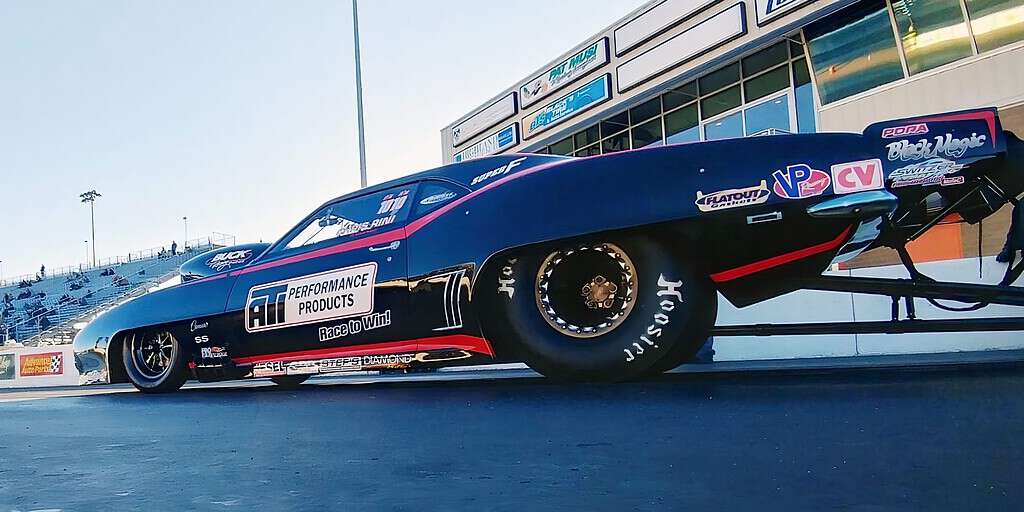
VP 5W-40 products typically carry API SN/SM credentials and strong detergent levels. Published HTHS values meet or exceed 3.5 mPa·s on performance grades. Flash points are competitive with other full synthetics. VP oils are popular among drag, circle-track, and high-output street builds.
European distribution has grown through specialist retailers. In the Baltic market, VP Racing products are available via Oilteck shop alongside Millers and LIQUI MOLY. VP is less focused on long-life OEM drain extensions than Mobil or Shell. It prioritises protection under extreme cylinder pressure.
Best for: High-output petrol engines, racing-oriented street builds, owners already using VP fuels who want matched lubricant chemistry.
TotalEnergies Quartz 9000 5W-40
TotalEnergies (formerly Total) Quartz 9000 Energy 5W-40 is a flagship synthetic with ACEA A3/B4 and C3 approvals. Total publishes kinematic viscosity around 14.2 cSt at 100°C and HTHS above 3.5 mPa·s on current data sheets.
Quartz 9000 targets PSA/Stellantis, Renault, and VAG platforms common across continental Europe. NOACK volatility typically sits near 10%. TBN fresh values support manufacturer-approved long-life intervals on compatible engines.
TotalEnergies benefits from direct OEM relationships with French and European manufacturers. If your service booklet lists Total as a preferred supplier, Quartz 9000 5W-40 is the logical match. Independent buyers gain a credible alternative to Shell and Castrol at similar price tiers.
Best for: PSA/Stellantis engines, Renault diesel and petrol platforms, fleet buyers with Total lubricant contracts.
Valvoline SynPower 5W-40
Valvoline SynPower MST 5W-40 (European formulation) delivers fully synthetic protection with ACEA A3/B4 and C3 credentials. Valvoline’s heritage spans over 150 years, and SynPower targets turbocharged direct-injection engines.
Typical SynPower 5W-40 data: kinematic viscosity ~14.0–14.5 cSt at 100°C, HTHS ≥ 3.5 mPa·s, API SN/SP compatibility. NOACK figures align with other premium synthetics in the 9–11% range. Valvoline often prices aggressively against Mobil 1 and Castrol at retail.
SynPower suits buyers who want recognised brand history without paying ester-race premiums. It is less exotic than Motul 300V or Millers CFS NT+. For standard turbo petrol and diesel duty cycles, the data sheets support confident use.
Best for: Budget-conscious synthetic buyers, mixed fleets, US-brand preference in European spec.
Master 5W-40 Synthetic Engine Oil Comparison Table
The table below summarises typical data-sheet ranges for the products discussed. Exact values vary by batch and regional formulation. Always check the label on the bottle you buy.
| Brand / Product | KV100 °C (cSt) | HTHS (mPa·s) | NOACK (%) | Key Approvals | Best Use Case |
|---|---|---|---|---|---|
| Millers CFS 5W-40 NT+ | 14.0–14.8 | ≥ 3.7 | ~8–9 | ACEA A3/B4 | Track / tuned engines |
| Mobil 1 ESP 5W-40 | ~14.2 | ≥ 3.5 | ~9–10 | ACEA C3, VW 507.00 | OEM diesel daily driver |
| Castrol Edge 5W-40 | ~14.3 | ~3.7 | ~10 | ACEA C3, API SP | Turbo petrol / mixed use |
| Shell Helix Ultra 5W-40 | ~14.6 | 3.5–3.7 | ~9 | ACEA C3, MB 229.5 | Long-life diesel |
| Motul 7100 5W-40 | ~14.5 | ≥ 3.5 | ~9 | ACEA A3/B4, API SN | Spirited street |
| Motul 300V 5W-40 | ~15.0+ | ≥ 3.8 | < 8 | Race use | Competition / track |
| LIQUI MOLY Leichtlauf 5W-40 | ~14.5 | ≥ 3.5 | ~10 | ACEA C3, VW 507.00 | VAG diesel / mixed fleet |
| VP Racing 5W-40 | ~14.0–14.5 | ≥ 3.5 | ~9–10 | API SN | High-output / racing street |
| TotalEnergies Quartz 9000 5W-40 | ~14.2 | ≥ 3.5 | ~10 | ACEA C3 | PSA / Renault platforms |
| Valvoline SynPower 5W-40 | ~14.0–14.5 | ≥ 3.5 | ~9–11 | ACEA C3, API SP | Value synthetic |
For a wider field beyond these nine brands, our expanded top 20 brands 5W-40 comparison ranks additional products by the same criteria.
Best 5W-40 Motor Oil for Turbocharged Engines
Turbochargers impose brutal conditions on lubricants. Hot shutdowns, shaft speeds above 200,000 rpm, and oil temperatures spiking past 130°C demand 5W-40 oil for turbocharged engines with high HTHS and low NOACK volatility.
Top picks for turbo protection: Millers CFS NT+ for track-biased use, Castrol Edge for retail convenience, Mobil 1 ESP for OEM diesel compliance, and Motul 300V for pure performance. All four maintain HTHS above 3.5 mPa·s and use fully synthetic base stocks.
Avoid generic semi-synthetics or oils without published HTHS data. A turbo bearing failure costs far more than the price gap between budget and premium 5W-40.
Diesel vs Petrol: Matching 5W-40 to Your Engine
Diesel engines produce soot, acids, and higher blow-by contamination. They need oils with strong TBN, dispersant packages, and—on DPF-equipped cars—low-SAPS ACEA C3 formulation. Petrol turbo engines prioritise HTHS, deposit control, and oxidation stability.
Crossover products like LIQUI MOLY Leichtlauf 5W-40 and Mobil 1 ESP serve both fuel types when the manual allows. Pure petrol performance builds may accept A3/B4 oils without C3 if no DPF is fitted. When in doubt, choose C3—it satisfies the stricter diesel requirement without harming petrol engines.
Modern common-rail diesels in the Baltic fleet—VW 2.0 TDI, BMW 320d, Mercedes OM651—almost universally specify C3-grade 5W-40. Match the exact VW or MB approval number on the label.
Climate, Storage, and Baltic Year-Round Use
Latvia, Estonia, and Lithuania see winter lows near −20°C and summer highs above 30°C. A 5W-40 handles both without seasonal changeovers. The 5W cold-crank rating protects during January mornings in Riga. The 40 hot rating stabilises oil pressure during July towing runs.
Store oil in a cool, dry place. Partially used containers should be sealed tightly. Do not mix brands mid-drain unless performing an emergency top-up—then schedule a full change soon. Consistent lubricant chemistry preserves additive balance.
Drain Intervals: What Data Sheets Do Not Tell You
TBN and oxidation limits define when oil is spent—not calendar time alone. Manufacturer fixed-service schedules (e.g., 15,000 km or 12 months) assume average driving. Short-trip city cycles, track days, and tuned engines shorten effective oil life.
Performance oils like Motul 300V and Millers CFS NT+ often recommend shorter drains than Mobil 1 ESP. That trade-off buys protection margin under heat. Follow the bottle’s service guidance and your mechanic’s oil analysis if you extend intervals.
Oil analysis (used oil testing) reveals TBN depletion, viscosity drift, and wear metals. Fleet operators in the Baltic region increasingly use analysis to optimise drain schedules. Enthusiasts running track oil can verify whether 5,000 km street use still leaves adequate TBN.
How to Spot Counterfeit and Mislabeled Oil
Premium 5W-40 attracts counterfeiters. Buy from authorised retailers like the Oilteck online shop or established motor factors. Check batch codes, hologram seals, and label print quality.
Verify approvals on the manufacturer website using the product code on the bottle. If the price is far below market average, suspicion is warranted. Counterfeit oil destroys engines silently—wear accelerates long before the oil light triggers.
Price vs Performance: Setting Realistic Expectations
A litre of Millers CFS NT+ or Motul 300V costs more than Valvoline SynPower or supermarket Castrol. The premium buys ester chemistry, lower friction, and thermal headroom—not magic. A standard commuter diesel on a fixed OEM schedule may never exploit those margins.
Match spend to duty cycle. Daily TDI fleet: Mobil 1 ESP or LIQUI MOLY Leichtlauf. Weekday commuter plus monthly track: Millers CFS NT+ or Motul 7100. Dedicated time-attack build: Motul 300V or VP Racing 5W-40. Rational buying beats brand loyalty.
Our Top Picks by Category in 2025
- Best overall OEM compliance: Mobil 1 ESP 5W-40 — broad approvals, proven long-life data.
- Best diesel / DPF protection: LIQUI MOLY Leichtlauf 5W-40 — C3 low-SAPS, VAG trusted.
- Best track / tuned engine: Millers CFS 5W-40 NT+ — published friction reduction, ester base.
- Best retail availability: Castrol Edge 5W-40 — strong HTHS, easy to find across Europe.
- Best value synthetic: Valvoline SynPower 5W-40 — credible specs at lower shelf price.
- Best racing pedigree: Motul 300V 5W-40 — full ester, lowest NOACK in class.
- Best US motorsport brand: VP Racing 5W-40 — bold additives, performance focus.
- Best PSA / Renault match: TotalEnergies Quartz 9000 5W-40 — OEM-aligned chemistry.
Frequently Asked Questions
What is the best 5W-40 motor oil for a VW 2.0 TDI?
LIQUI MOLY Leichtlauf 5W-40 and Mobil 1 ESP 5W-40 both carry VW 507.00 and ACEA C3 approvals required for DPF-equipped TDIs. Either product meets the low-SAPS requirement. Choose based on price and availability at your local retailer.
Can I use 5W-40 instead of 5W-30?
Only if your manufacturer approves it. Some engines specify 5W-30 for fuel economy. Switching to 5W-40 without approval may trigger warranty issues and can affect cold-start flow on very tight tolerances. Check the cap label and service booklet first.
How often should I change 5W-40 synthetic oil?
Follow the manufacturer schedule as a minimum—typically 10,000–15,000 km or once yearly. Performance oils under hard use may need 5,000–8,000 km. Short trips, towing, and track days shorten oil life regardless of what the dashboard reminder suggests.
Is 5W-40 good for high-mileage engines?
Yes, if the engine specifies 5W-40 and has no excessive wear. High-mileage formulations exist (Castrol Magnatec, LIQUI MOLY Molygen) with seal conditioners. If consumption exceeds one litre per 1,000 km, fix mechanical issues before chasing oil brand changes.
Does brand matter if viscosities match?
Yes. Base oil quality, additive chemistry, and approval testing differ between brands at the same SAE grade. Two 5W-40 labels may share viscosity but diverge on HTHS, NOACK, TBN, and OEM validation. Data sheets—not shelf price alone—should guide the decision.
Where can I buy premium 5W-40 in the Baltic region?
Authorised online retailers ship across Latvia, Estonia, and Lithuania. The Oilteck shop stocks Millers, LIQUI MOLY, VP Racing, and other brands discussed here with specification sheets available on request.
Final Verdict: Choosing Your Best 5W-40 Motor Oil
The best 5W-40 motor oil for your car depends on engine type, driving style, and approval requirements—not a universal winner. Data sheets level the field: compare HTHS, NOACK, TBN, and OEM stamps before you buy.
Millers CFS NT+ leads for friction-sensitive performance use. Mobil 1 ESP and LIQUI MOLY Leichtlauf dominate OEM diesel compliance. Castrol Edge and Shell Helix Ultra cover mainstream turbo petrol with proven long-life credentials. Motul, VP Racing, TotalEnergies, and Valvoline fill specific niches from track esters to value synthetics.
Start with your owner’s manual approval list. Shortlist two or three products from this guide. Buy from a trusted source. Change on schedule. That approach protects your engine better than any single brand claim on a poster.