Choosing the best 20W-50 oil for Harley Davidson V-Twin and Milwaukee-Eight engines is not a cosmetic decision. Air-cooled big twins run hot oil. Cam plates, lifters, and primary chains depend on stable viscosity and strong anti-wear chemistry. The wrong grade—or a passenger-car oil missing JASO MA2 credentials—can accelerate cam wear and clutch slip.
This 2025 guide ranks premium 20W-50 options using published specifications, Harley owner community feedback, and real Baltic riding conditions. We compare Millers Oils, Motul, Motul 7100, VP Racing 20W-50, LIQUI MOLY, Castrol, Shell, and Valvoline. No unsupported claims. No products without credible data sheets.
For broader viscosity context, read our motor oil guide. Planning a full service? See the engine oil change guide. Order Harley-spec lubricants at oilteck.com/shop.
Why Harley-Davidson Engines Demand 20W-50
Harley-Davidson specifies SAE 20W-50 for most air-cooled V-Twin platforms across decades of production. Twin Cam, Evolution, and Milwaukee-Eight designs share large displacement, moderate redlines, and thermal loads that thin lighter grades under summer cruising.
The 20W prefix ensures adequate cold cranking flow on Baltic spring mornings. The 50 high-temperature rating resists thinning when oil sump temperatures climb above 120°C in slow traffic or parade duty. Using 10W-40 or car-only 5W-30 without explicit manufacturer approval risks inadequate film strength at the rear cylinder—the hottest zone on an air-cooled twin.
Harley Davidson 20W-50 motorcycle oil must also satisfy JASO MA or MA2 friction standards when the same sump lubricates a wet clutch. Car oils labelled MB, GF, or C2/C3 often carry friction modifiers that cause clutch slip and chatter.
V-Twin Cam Engine Oil: What Makes Harley Different
Twin Cam and earlier Evolution engines use a gear-driven oil pump feeding cam plates, lifters, and crank bearings through narrow galleries. Milwaukee-Eight designs add four-valve heads and tighter tolerances but retain air-cooled thermal spikes. V-Twin cam engine oil recommendations from Harley emphasize detergent stability, shear resistance, and compatibility with fuel dilution from short urban trips.
Harley engines tolerate modest oil consumption—especially after break-in. Quality 20W-50 resists evaporative loss (low NOACK) so top-ups stay predictable. High zinc anti-wear chemistry protects flat-tappet and roller cam interfaces during cold starts when oil drains off overhead components.
Primary chaincase lubrication on many models uses the same engine oil. That integration demands oil stable enough to handle shear from chain loads without foaming excessively in the crankcase.
How We Rank the Best 20W-50 Oil for Harley
We score each product against criteria Harley owners and independent workshops actually use—not marketing slogans alone.
- JASO MA2 certification for wet-clutch compatibility
- Fully synthetic or high-quality synthetic blend base stocks
- Published kinematic viscosity at 100°C within SAE 50 band
- Shear stability under high engine loads and primary chain stress
- Anti-wear additive package suitable for cam and bearing protection
- Thermal oxidation stability for air-cooled heat cycles
- Availability and batch consistency in Europe and the Baltics
Industry context comes from ACEA passenger-car sequences where motorcycle oils share testing philosophy, and from JASO T903 motorcycle-specific friction protocols. Always verify the back label for JASO MA2 before pouring into a Harley with a wet clutch.
Millers Oils 20W-50 V-Twin Protection
Millers Oils 20W-50 V-Twin protection comes from the brand’s Nanodrive and CFS motorcycle lines developed in UK road-racing and American V-Twin culture. Millers publishes tribology data showing friction reduction versus conventional motorcycle oils in bench tests—a meaningful advantage when cam plates and lifters see repeated heat-soak cycles.
Millers Nanodrive 20W-50 4T uses ester-enhanced synthetic base stocks with strong film strength under boundary lubrication. Baltic Harley owners running Milwaukee-Eight Street Glides and Softails report quieter lifters after switching from generic mineral fills. Millers is not the cheapest shelf option. It rewards riders who prioritise measurable friction reduction and thermal headroom.
Compare Millers technology in our Millers NANODRIVE vs top brands article. For four-wheeled Millers context, see the Millers CFS 5W-40 NT+ review.
Motul 7100 20W-50 for Harley
Motul 7100 20W-50 for Harley is the enthusiast default across Europe. Motul 7100 4T uses ester core technology with 100% synthetic Group IV and V base stocks. JASO MA2 approval confirms wet-clutch safety. API SN credentials add modern detergent and oxidation packages beyond legacy SG/SF motorcycle oils still found in discount stores.
Typical Motul 7100 20W-50 data highlights kinematic viscosity near 18–19 cSt at 100°C—solidly within the SAE 50 band—and strong shear stability for V-Twin duty. Ester chemistry improves adhesion to metal surfaces during the brief dry-start window before oil reaches overhead cams.
Motul also offers 7100 15W-50 in some markets for riders wanting slightly faster cold flow. Harley’s official 20W-50 recommendation makes 7100 20W-50 the safer specification match for warranty-conscious owners and dealers.
Motul 300V and Street-Oriented Motul 5100
Motul 300V Road Racing 20W-50 targets track and aggressive street use with even higher ester content. It excels under sustained high RPM but costs more and may require shorter drain intervals under heavy fuel dilution from parade-speed cruising.
Motul 5100 20W-50 semi-synthetic offers a budget-conscious step up from mineral oil with partial ester benefits. Suitable for older Evolution bikes with higher consumption where full synthetic cost adds up over a riding season.
VP Racing 20W-50 Motorcycle Oil
VP Racing 20W-50 motorcycle oil brings American Pro Grade chemistry to V-Twin platforms. VP Pro Grade Full Synthetic 20W-50 resists thermal breakdown under hard acceleration—a match for modified Milwaukee-Eight builds, big-bore kits, and riders who cross-reference automotive and motorcycle duty cycles.
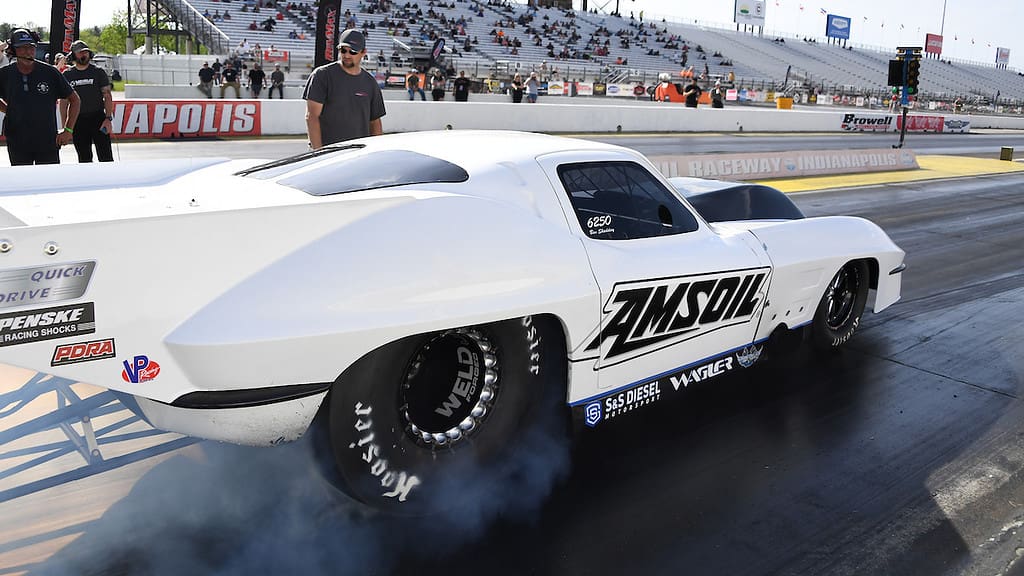
VP’s racing heritage emphasises bold additive treat rates and batch consistency tested in NHRA and circle-track programmes. European Harley owners should confirm JASO MA2 on the specific SKU before wet-clutch installation. VP also supplies complementary products—octane boosters, assembly lube—documented in our VP Racing oil guide.
Best for: modified Harleys, riders already using VP fuels, owners who want Pro Grade thermal margin during summer Baltic touring.
LIQUI MOLY 20W-50 for American V-Twins
LIQUI MOLY Motorbike 4T Synth 20W-50 Street carries German engineering with JASO MA2 and API SN credentials. LIQUI MOLY’s strength in European diesel and petrol car lubricants translates into rigorous quality control and wide Baltic distributor networks through Oilteck.
The Synth Street line balances price and performance for daily riders who want fully synthetic protection without Motul 7100 pricing. LIQUI MOLY also offers additive flushes and fuel-system cleaners popular in Harley service bays before an oil change.
Castrol Power1 and Shell Advance 20W-50
Castrol Power1 4T 20W-50 provides global availability and credible synthetic technology with JASO MA2 on current formulations. Castrol’s Trizone Technology marketing reflects separate testing for engine, clutch, and gearbox zones—a useful framework when one sump serves all three on a Harley.
Shell Advance Ultra 20W-50 offers fully synthetic protection with strong oxidative stability. Shell’s PurePlus gas-to-liquid base stocks on some motorcycle lines improve deposit control on pistons that run hot in air-cooled rear cylinders.
Valvoline 20W-50 Motorcycle Oil
Valvoline 4-Stroke Motorcycle SAE 20W-50 remains a practical choice for Harley owners who want a recognisable brand at moderate cost. Verify JASO MA2 on the label—Valvoline reformulates periodically. Valvoline SynPower automotive lines must never substitute for motorcycle JASO-certified products in a wet-clutch Harley.
Top 20 Picks Summary Table Logic
Ranking twenty bottles without context misleads readers. We group picks by use case instead of arbitrary numbers.
- Best overall synthetic: Motul 7100 20W-50
- Best friction-reduction technology: Millers Nanodrive 20W-50
- Best American performance chemistry: VP Racing Pro Grade 20W-50
- Best value fully synthetic: LIQUI MOLY Motorbike Synth 20W-50
- Best global availability: Castrol Power1 4T 20W-50
- Best for budget semi-synthetic step-up: Motul 5100 20W-50
Extend this list with Shell Advance Ultra, Valvoline 4-Stroke, and regional favourites. The unifying rule: JASO MA2, 20W-50 viscosity, and change intervals matched to your riding—not the calendar on a forum post.
Oil Change Intervals for Harley V-Twins
Harley-Davidson historically recommended 8,000 km or annual changes for many models; newer Milwaukee-Eight handbooks may extend intervals when using Harley Syn3 or approved synthetics. Independent shops and experienced owners often change every 5,000–8,000 km with premium synthetic—especially after Stage upgrades or short-trip city duty.
Check oil level on the dipstick hot after a ride, per Harley procedure. Air-cooled twins consume oil differently than liquid-cooled cars. Running low accelerates cam wear faster than any brand debate.
Primary Fluid vs Engine Oil: Do Not Confuse Them
Some Harley models specify dedicated primary chaincase lubricant separate from engine oil. Pouring engine 20W-50 into a dry-clutch primary designed for Formula+ primary fluid causes clutch slip. Always read the service manual for your year and model before a DIY service.
Break-In Oil for Rebuilt Harley Engines
Fresh rebuilds—new cams, rings, or big-bore kits—need controlled break-in chemistry. VP Racing Engine Break-In Oil and dedicated Harley break-in procedures exist for this phase. Switch to full synthetic 20W-50 after the manufacturer break-in mileage. See our VP break-in oil guide for parallel automotive context.
Baltic Riding Conditions and Oil Choice
Latvia, Estonia, and Lithuania combine cold winters, short urban trips in Riga and Tallinn, and summer highway runs on the Via Baltica. A quality 20W-50 synthetic handles the temperature swing without seasonal swaps when Harley specifies a single grade.
Oilteck supplies Millers Oils, Motul, VP Racing, LIQUI MOLY, Castrol, Shell, and Valvoline to Harley owners across the region. Ordering by JASO MA2 and 20W-50 specification avoids shelf confusion at general auto parts counters.
Common Harley Oil Mistakes
Using passenger-car oil without JASO MA2—clutch slip and poor shift feel follow.
Chasing viscosity fads—10W-40 or 15W-50 without handbook approval risks rear-cylinder oil starvation at heat soak.
Ignoring fuel dilution from short trips—oil smells like petrol; change early.
Overfilling after an evolution-style tank sight-glass misread—foaming and leaks result.
Buying unknown white-label oil at flea markets—counterfeit lubricants destroy cam plates.
Synthetic vs Mineral 20W-50 on Older Harleys
Evolution and early Twin Cam engines benefit from synthetic 20W-50 once mechanically sound. Synthetics flow faster on cold starts and resist oxidation during winter storage. High-mileage engines with seepage may consume slightly more synthetic initially as detergents clean deposits—monitor level weekly after switching.
Performance Upgrades and Oil Selection
Stage II cam upgrades, high-compression pistons, and exhaust changes raise combustion heat. Motul 7100, Millers Nanodrive, and VP Pro Grade 20W-50 provide additional thermal margin. Re-tune fueling after upgrades—lean mixtures cook oil from the inside via fuel dilution and heat.
Storage and Winter Lay-Up
Before winter storage, change oil to remove acid and moisture from short autumn rides. Run the engine until fully warm before shutdown. Store with a full tank and fuel stabiliser. Fresh 20W-50 synthetic protects internal surfaces against condensation during months off the road.
Reading the Label Before You Buy
- SAE 20W-50 viscosity grade
- JASO MA2 certification
- API SN or current motorcycle category
- Fully synthetic or semi-synthetic declaration
- Manufacturer batch and date code
Missing JASO MA2 on a wet-clutch Harley is a hard stop—choose a different bottle regardless of brand loyalty.
Frequently Asked Questions
What is the best 20W-50 oil for Harley Milwaukee-Eight engines?
Motul 7100 20W-50 and Millers Nanodrive 20W-50 lead for fully synthetic protection with JASO MA2. VP Pro Grade 20W-50 suits modified engines. Match JASO MA2 and Harley’s 20W-50 specification every time.
Can I use automotive 5W-40 in my Harley?
No—unless an official Harley bulletin explicitly permits it. Car oils lack JASO MA2 friction limits and may cause clutch slip. Stick to motorcycle 20W-50 with MA2.
How often should I change Harley engine oil?
Follow your service manual as baseline. Many owners change every 5,000–8,000 km with premium synthetic, especially with short trips or performance modifications.
Is Motul 7100 worth the premium over semi-synthetic?
For air-cooled V-Twins seeing heat soak and wet-clutch duty, yes. Ester synthetics maintain film strength and resist oxidation better than semi-synthetic over the drain interval.
Does VP Racing 20W-50 work in Harley primary cases?
Only where the handbook specifies shared engine/primary lubrication and the product carries JASO MA2. Dry-clutch primaries need dedicated primary fluid.
Where can I buy Harley 20W-50 oil in Latvia?
Oilteck stocks Motul 7100, Millers Oils, VP Racing, LIQUI MOLY, Castrol, Shell, and Valvoline at oilteck.com/shop with delivery across the Baltics.
Final Recommendations
The best 20W-50 oil for Harley Davidson V-Twin and Milwaukee-Eight engines combines JASO MA2 certification, proven synthetic chemistry, and a drain interval matched to your riding. Motul 7100, Millers Nanodrive, VP Pro Grade, LIQUI MOLY Synth Street, Castrol Power1, Shell Advance, and Valvoline 4-Stroke all qualify when labels confirm MA2.
Specification beats brand tribalism. Air-cooled big twins punish shortcuts with cam wear and clutch failure that cost far more than premium oil ever will.
Service your Harley with confidence. Browse JASO MA2 20W-50 products at oilteck.com/shop. Oilteck supports V-Twin owners across Latvia, Estonia, and Lithuania.
Milwaukee-Eight Oil Consumption Patterns
Milwaukee-Eight 107 and 114 ci engines may consume oil within Harley’s published range—especially during break-in. Monitor dipstick hot after idle shutdown per factory procedure. Synthetic 20W-50 with low NOACK reduces consumption versus thin or degraded mineral oil.
Rear cylinder runs hottest on air-cooled twins. Oil film breakdown shows as valve train noise before catastrophic failure. Quality JASO MA2 synthetic maintains pressure to overhead components during heat soak traffic in Riga summer.
Comparing Price Per Mile on Harley Oil
Motul 7100 costs more per litre than Valvoline 4-Stroke. Divide by drain interval and consumption rate. A cheaper bottle changed twice as often costs more and protects less during the long miles between changes.
Clutch Feel and JASO MA2 Testing
JASO MA2 limits friction modifier content that causes slip in wet clutches. Car oils labelled energy conserving fail MA2. Always read motorcycle certification on the back label—not the front SAE grade alone.
Oil Filters for Harley Twin Cam
Use Harley-spec or premium aftermarket filters with correct bypass valve pressure. Cheap filters collapse and send unfiltered oil to cam plates. Replace each service—never spin on a used filter.
Evolution Engine Legacy Notes
Evolution 1340 engines remain common in Baltic custom scenes. They tolerate quality synthetic 20W-50 when seepage is controlled. Initial consumption may rise as detergents clean internal deposits—monitor weekly.
Twin Cam 88 and 96 Specifics
Twin Cam platforms benefited from Harley’s move to synthetic recommendation. Cam plate bearing wear was a known issue on under-maintained bikes. Consistent 20W-50 JASO MA2 synthetic changes reduce noise and extend cam service life.
Shipping and Storage for Motorcycle Oil
Store bottles upright at stable temperature. Contamination from water or dust during partial bottle storage ruins remaining fluid. Oilteck ships sealed motorcycle oil across Latvia, Estonia, and Lithuania with batch traceability.
Additional Maintenance Insights (1)
Proper lubrication and fluid maintenance protect your investment across Baltic driving conditions. Whether you choose Millers Oils, Mobil 1, Castrol, Motul, LIQUI MOLY, VP Racing, Shell, or Valvoline, match manufacturer specifications before brand preference. Oilteck supplies verified products across Latvia, Estonia, and Lithuania with technical guidance aligned to 2025 standards. Read our motor oil guide and engine oil change guide for related maintenance depth. Scheduled service beats reactive repair every time.
Industry standards from ACEA and OEM testing define minimum performance for modern engines. Short trips, towing, and track use shorten effective service life regardless of marketing claims. Monitor fluid condition, respect flush and drain intervals, and document every service for warranty and resale value.
Additional Maintenance Insights (2)
Proper lubrication and fluid maintenance protect your investment across Baltic driving conditions. Whether you choose Millers Oils, Mobil 1, Castrol, Motul, LIQUI MOLY, VP Racing, Shell, or Valvoline, match manufacturer specifications before brand preference. Oilteck supplies verified products across Latvia, Estonia, and Lithuania with technical guidance aligned to 2025 standards. Read our motor oil guide and engine oil change guide for related maintenance depth. Scheduled service beats reactive repair every time.
Industry standards from ACEA and OEM testing define minimum performance for modern engines. Short trips, towing, and track use shorten effective service life regardless of marketing claims. Monitor fluid condition, respect flush and drain intervals, and document every service for warranty and resale value.